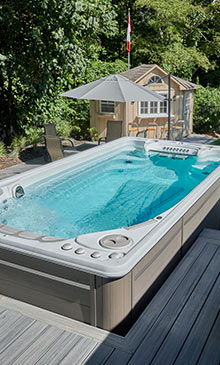




The depth of a swim spa is one of the few specifications you cannot change after installation. Jets, lighting, accessories, and water care systems can all be upgraded over time. The depth of the water is fixed the moment the spa is set in place.
Most models on the market sit between 50 and 60 inches, and the small variations between them shape everything from stroke quality during a swim to how a session feels after a long day.
Choosing the right depth comes down to who is using the spa, what they want from it, and where it is going.
What Is the Standard Depth of a Swim Spa?
Most swim spas are between 50 and 60 inches deep, with the majority of models landing right around 52 inches. That measurement reflects the total interior depth from the floor of the spa to the top rim. The usable water depth, once filled to the operating line, typically sits one to two inches below that.
For context, a standard backyard pool runs anywhere from 36 inches in the shallow end to 96 inches or more in the deep end. A swim spa sits in the middle. Deep enough to swim against a current without scraping the floor, shallow enough that most adults can stand comfortably.
If you are researching swim spa depth because you want to know whether one will work for your household, your space, or your training goals, the short answer is that depth choices are more limited than pool depth choices, and the differences between models matter more than you might expect.
How Deep Are Swim Spas Across the Most Common Models?
Depth is fairly consistent across the swim spa category, but the small variations have real consequences for how the spa feels to use.
Here is what you will typically find:
- 52 inches is the most common depth, used across the majority of swim spa lines, including the AquaSport and AquaPlay models we carry from Hydropool.
- 60 inches is the deeper end of the standard range, generally reserved for swim spas built specifically for serious swimmers, triathletes, or aquatic therapy use.
- 36 to 40 inches appears in a small number of compact or plug-and-play models, but these are closer to oversized hot tubs with a swim feature than true swim spas.
At Great Bay Spa & Sauna, our Hydropool AquaSport and AquaPlay models sit at 52.75 inches, which gives most adults chest-deep water for swimming and full-body submersion for relaxation and hydrotherapy.
Why Swim Spa Depth Matters More Than People Expect
Depth is one of the few specifications on a swim spa that you cannot adjust after installation. You can change jets, lighting, accessories, and water care systems over time. You cannot change how deep the water sits. That makes depth a decision worth understanding before you buy.
Three things change based on depth.
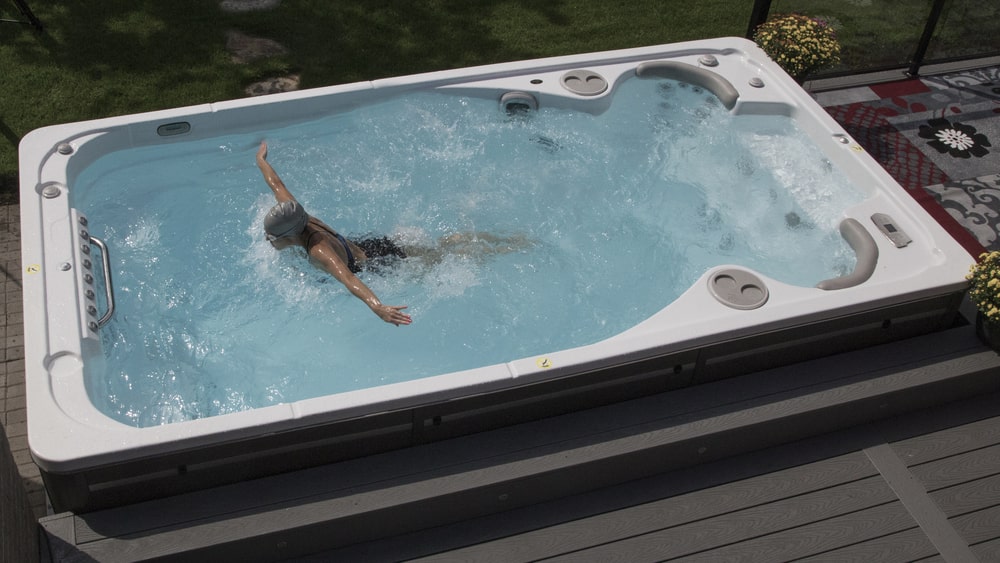
- Swim quality: A swim current works by pushing water against you while you stay in place. If the water is too shallow, your stroke pulls air or scrapes the floor, especially on the recovery phase of freestyle or backstroke. Most serious swimmers want a minimum of 50 inches of water depth to maintain proper form.
- Hydrotherapy effectiveness: Buoyancy reduces the load on your joints by about 80 percent when you are submerged to the neck. Shallower spas reduce that benefit. If you bought your swim spa partly for low-impact recovery, depth is what makes that recovery possible.
- Household versatility. Taller users, families with children, and anyone planning to use the spa for aquatic exercise all benefit from a deeper interior. A 52-inch spa works for most households. A 60-inch spa works for households where someone is over six feet tall or where the spa will be used for sport-specific training.
When Does a Deeper Swim Spa Actually Make Sense?
A deeper swim spa is the right call in a few specific cases.
If you are training for open water swimming, triathlons, or competitive events, a deeper interior gives you the form and stroke clearance you need. Coaches and athletes generally prefer 60 inches of depth or more when available.
If anyone in your household is over six feet tall, the difference between 52 and 60 inches becomes noticeable. At 52 inches, a six-foot-two adult stands with the water at their lower chest. At 60 inches, the water reaches the shoulders, which is more comfortable for both exercise and relaxation.
If you plan to use the spa for aquatic physical therapy, deeper water gives you more range for resistance exercises, walking, and joint decompression work. Many physical therapists recommend chest-deep water for rehabilitation routines.
If your primary use is family time, hot tub-style relaxation, and casual swimming, a standard 52-inch depth is more than enough. Going deeper adds cost and changes installation requirements without adding day-to-day value.
How Swim Spa Depth Affects Installation and Site Planning
Depth influences more than the swimming experience. It also shapes how the spa gets installed.
A deeper swim spa weighs more once filled. A 14-foot swim spa at 52 inches deep holds roughly 1,700 gallons of water, which adds about 14,000 pounds of weight to whatever surface it sits on. A 19-foot model holds more than 2,500 gallons. Your installation pad, deck, or foundation has to be rated for that load.
Depth also affects how the spa enters your yard. Our team handles this regularly with our all-terrain forklift and crane equipment, but the deeper the spa, the larger the footprint during delivery. Tight side yards, narrow gates, and overhead obstructions all become more relevant as the spa gets bigger.
If you are planning a partial or full in-ground installation, depth determines how deep you need to dig and how much of the spa sits below grade. Most owners who go in-ground choose to leave eight to twelve inches of the spa above ground level for access and serviceability.
Matching Swim Spa Depth to Your Goals
A simple way to think about depth selection is to start with your primary use case and work backward.
- Choose a standard 52-inch depth if you want a swim spa that handles the full range of typical use. Family swimming, fitness routines, hydrotherapy, relaxation. This is the depth we recommend for most New England homes, and it is the depth across our best-selling Hydropool models, including the AquaPlay 13FFP, AquaSport 14AX, and AquaSport 19DTAX.
- Choose a 60-inch depth if you are buying primarily for serious swim training, if multiple household members are tall, or if you want maximum hydrotherapy benefit. These models are less common and worth ordering through one of our specialists who can walk you through availability and lead times.
- Avoid swim spas under 50 inches deep unless you specifically want a hot tub with light swim capability rather than a true swim spa. The current resistance, stroke quality, and hydrotherapy benefit all drop noticeably below that threshold.
Frequently Asked Questions
What is the depth of a swim spa?
Most swim spas are between 50 and 60 inches deep, with 52 inches being the most common across major brands.
Are swim spas deep enough to actually swim in?
Yes! The depth combined with a built-in current is what allows you to swim in place. At 52 inches or deeper, most adults have enough water clearance for proper stroke mechanics.
Can you stand up in a swim spa?
Yes. The standard 52-inch depth lets most adults stand comfortably with the water at chest level, which is what makes swim spas usable for both fitness and relaxation.
Does a deeper swim spa cost more?
Generally yes. Deeper models are typically larger overall, hold more water, require more energy to heat, and cost more to purchase. The Hydropool AquaSport 19DTAX is a good example of a larger, deeper option in our lineup.
How much water does a swim spa hold?
Depending on length and depth, swim spas hold between 1,300 and 2,800 gallons. A 14-foot model at standard depth holds around 1,700 gallons.
Talk to a Swim Spa Specialist at Great Bay
Picking the right swim spa depth comes down to who is using it, what they want from it, and where it is going. Our team has been helping New England homeowners answer those questions for decades.
Visit one of our showrooms in Portsmouth, NH or South Portland, ME, or contact us to walk through your options.