Fair Frenzy Sale
Hot Tubs Save Up to $10,000+
Shop the Sale
Contents
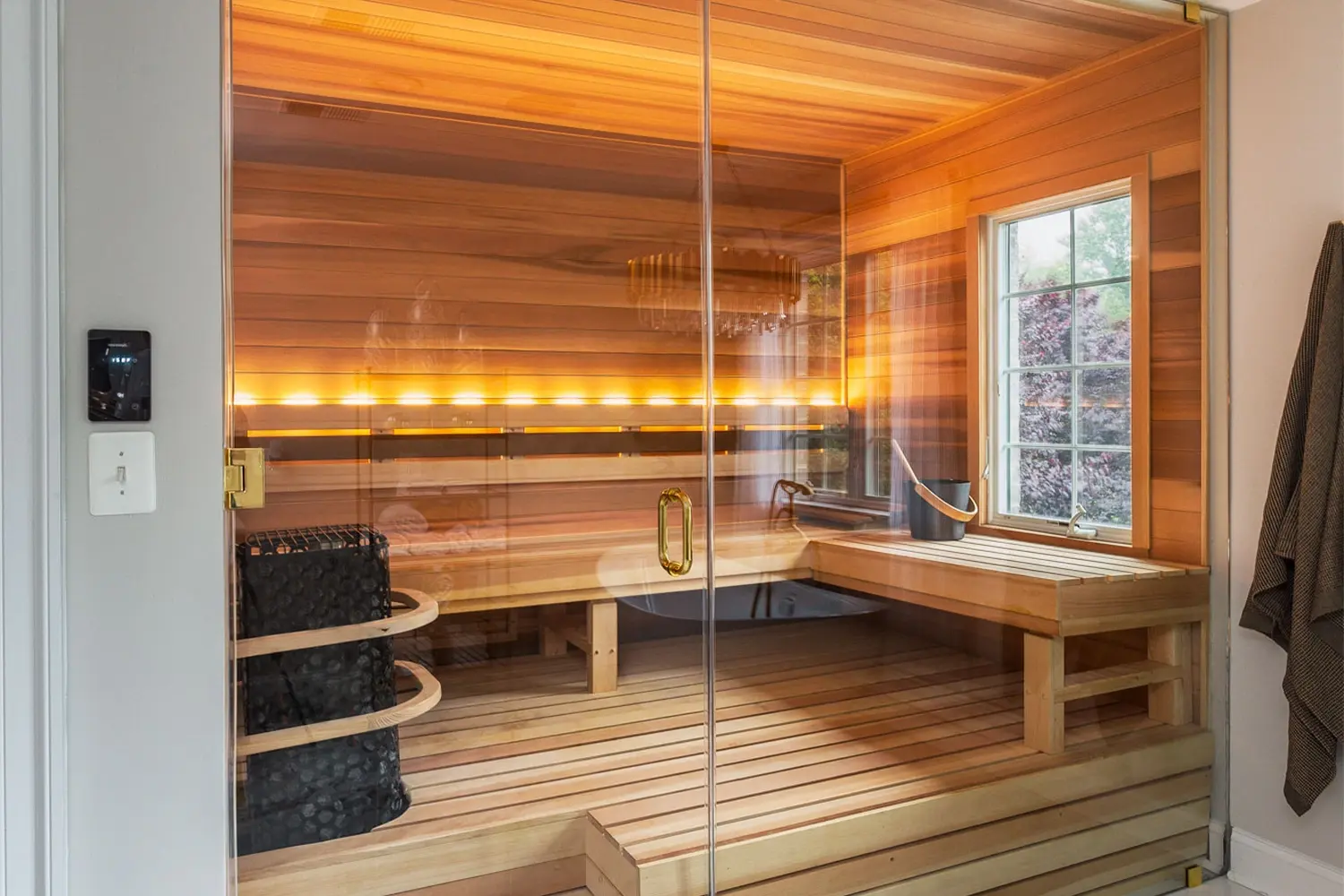
A sauna is one of the lowest-maintenance investments you can make in your home, especially compared to a hot tub or pool. Still, a little routine care goes a long way. Wiping down benches after each session, airing out the cabin, and handling a few seasonal tasks will keep your sauna hygienic, looking new, and running well for decades.
Our guide walks through sauna maintenance by frequency, with specific notes for infrared, traditional, and outdoor models.
The habits that protect a sauna happen in the minutes right after you step out. Wipe benches and backrests down with a towel to lift sweat and body oils before they set into the wood grain. Bring a towel or small rug to sit or lie on during your session, since this single habit reduces the buildup that eventually causes staining.
Make sure to leave the door open once you are finished so moisture has somewhere to go. A cabin that dries out fully between sessions is far less likely to develop mold, mildew, or a musty smell.
Once a week, give the whole cabin a proper once-over. Sweep or vacuum the floor and duckboards to clear out dust, hair, and any debris tracked in on bare feet. Wipe down benches, backrests, walls, and the floor with a cloth dampened in a solution of water and mild vinegar. Vinegar cuts through oils and mineral residue without the fumes or wood damage that come with bleach or ammonia-based cleaners.
If you use a traditional steam sauna, avoid pouring hard water over the rocks, since the calcium and magnesium in it leave behind a limescale that is difficult to remove later.
Set aside time once a month for a deeper clean. Pull benches away from the wall where possible and check corners, seams, and under-bench areas for early mold or mildew, since these spots trap moisture longer than open surfaces. Wipe down vents and door hardware, which collect dust even when the rest of the cabin looks clean.
If you notice any staining or a rough patch on the wood, sand it by hand with a fine-grit disc rather than reaching for a chemical cleaner. Sanding lifts discoloration without introducing anything that reacts poorly to heat.
Once a year, plan for a few larger tasks. Traditional saunas need their heating stones restacked or replaced, since stones settle and crack with regular use, and they lose some of their heat retention over time. Rinse new or replacement stones before loading them to remove loose grit and dust. Check the wood throughout the cabin for cracking, warping, or loose joints, and treat exposed surfaces with a food-grade paraffin oil made for sauna use if the wood looks dry. Tighten any loose screws on doors, vents, and benches, and confirm the door still closes and latches properly. If your sauna runs on an electric heater, have the wiring and connections inspected by a qualified electrician to catch wear before it becomes a bigger repair. Taking time for these yearly checks ensures your home sauna remains a safe, relaxing retreat for decades.

Infrared saunas skip the heated rocks and steam entirely, so their maintenance leans lighter on water exposure and heavier on protecting the panels and control system. Wipe the interior panels and benches with a dry or barely damp cloth, since infrared components are more sensitive to standing moisture than a traditional heater and stones. Keep the control panel and any exposed wiring dry at all times, and avoid spraying cleaner directly onto the panels. Check that the ventilation is clear so that heat distributes evenly across the cabin.
Traditional saunas built around a rock heater need a bit more attention to the heating element itself. Pour water over the stones gradually rather than all at once, which protects both the stones and the heating coils underneath. Rinse new stones before use and inspect them periodically for cracking, replacing any that look worn. Give the heater guard and surrounding wood an occasional wipe to clear dust, since heaters draw in more debris than any other part of the cabin.
Outdoor and barrel saunas face weather exposure that indoor cabins never see, so their exterior needs its own routine. Check the exterior wood seasonally for weathering, and treat any exposed exterior surfaces with a wood protectant rated for outdoor use, keeping that treatment strictly to the outside of the cabin. Clear leaves, snow, and debris away from the base and roofline so water does not pool against the wood. Inspect the door seal and roof seams before each season to catch any gaps before moisture gets in.
Different softwoods used in sauna construction require slightly different care to maintain their natural oils and aroma:
A few habits shorten a sauna’s lifespan faster than anything else.
| Task | After Each Use | Weekly | Monthly | Annually |
| Wipe benches and backrests | Yes | |||
| Air out cabin with door open | Yes | |||
| Sweep or vacuum floor and duckboards | Yes | |||
| Clean surfaces with water and vinegar | Yes | |||
| Check corners for mold or mildew | Yes | |||
| Sand stained or worn wood | Yes | |||
| Re-stack or replace heating stones | Yes | |||
| Treat wood with paraffin oil | Yes | |||
| Inspect wiring and electrical connections | Yes |
How often should I clean my sauna? Wipe down benches after every use, do a full surface clean weekly, and set aside time monthly for a deeper check of corners and under-bench areas. Larger tasks like re-stacking stones and treating wood only need attention once a year.
Can I use bleach to clean my sauna? No. Bleach and other harsh chemicals dry out and discolor sauna wood. A water and mild vinegar solution cleans just as effectively without the damage.
Do I need to seal or varnish the wood inside my sauna? No. Heat causes sealants and varnishes to break down and off-gas inside the cabin. Sand-stained wood by hand instead, and only treat exterior wood on outdoor models with an outdoor-rated protectant.
Whether you’re due for your first seasonal deep clean or looking to protect a new investment, using the right tools makes all the difference. Explore our selection of sauna care kits and accessories at Great Bay Spas to keep your sauna operating smoothly and looking brand-new for years to come.
Have questions or need expert guidance? Speak directly with a Great Bay Spa & Sauna specialist. Our team is here to help you compare models, understand features, and find the right fit for your space. Schedule a conversation today and get personalized recommendations from the experts who know our products best.
The best way to see if this hot tub is right for you is by trying it out for yourself. It's best to experience the relaxing sensation of hydrotherapy before you purchase.
Want to learn more before you decide? Request a free brochure to explore our full range of spas, saunas, and accessories. Get detailed product information, features, and inspiration delivered right to your inbox or mailbox—so you can start planning your perfect at-home retreat.
We’d love to hear from you. Whether you have a question, need more information, or just want to connect, our team is here to help. Fill out the form below and we’ll get back to you as soon as possible.
Looking to explore your options in person or from home? Schedule an appointment with our team to experience Great Bay Spa & Sauna your way. Choose from an in-store visit, a virtual demonstration, or a relaxing test soak—whatever helps you find the perfect fit for your home and lifestyle.
Need maintenance or repair? Our service team is here to keep your spa or sauna running smoothly. Use the form below to schedule a service appointment, and we’ll follow up to confirm the details and get your system back in top condition.
Ready to bring home your perfect spa, sauna, or massage chair? Claim your exclusive deal or personalized sale price today. Our team will review your selection and share the best available offer—no pressure, just honest pricing and expert guidance to help you choose what’s right for you.